
Effective Residential Treatment for Teens Starts with Connected Support
How the Live Strong House Model Supports Change
When you’re considering residential care for your son, you want to understand how the program will help him beyond a weekly therapy session.
At Live Strong House, we connect clinical care with everyday support. Your son has opportunities to practice what he is learning with adults who know his goals and can help when challenges arise. His education continues alongside that work, and your family remains involved in preparing for what comes next.
One Team Working Toward Shared Goals
A student may understand a coping skill in therapy but struggle to use it when he feels frustrated. Our model connects those two moments.
Licensed therapists coordinate with life coaches and academic staff so treatment goals can guide support throughout the day. The team also brings observations from daily life back into treatment planning. If a difficulty keeps coming up outside sessions, that information helps the therapist understand where your son needs more support.
This coordination gives students consistent guidance while preserving appropriate privacy in individual therapy.


Live-In Coaching Makes Room for Everyday Practice
Our life coaches live alongside students. They are there when an ordinary responsibility becomes difficult and your son needs help working through it.
For example, a disagreement about a shared space can become an opportunity to pause and practice a calmer response. A missed task can lead to a conversation about what made it hard to begin.
Coaches model the skill, offer guidance, and give students another chance to try. As a student becomes more capable, support can shift toward check-ins rather than step-by-step help.
That repeated practice is central to our approach. Your son has time to work on a skill across different situations instead of being expected to master it after one conversation.
Small Ratios Support Consistent Relationships
In our residential home living environment, Live Strong House maintains a low student-to-life-coach ratio, creating space for personalized and meaningful support. Students live in comfortable townhomes where dedicated life coaches actively participate in daily routines with them.
This small setting gives coaches time to get to know your son and notice when he needs help. It also creates regular opportunities to follow up after a difficult moment.
Trust takes time. Consistent relationships give students space to ask for help and work through disagreements with someone who knows them. Accountability becomes an ongoing conversation rather than an interaction that ends when a task is finished.

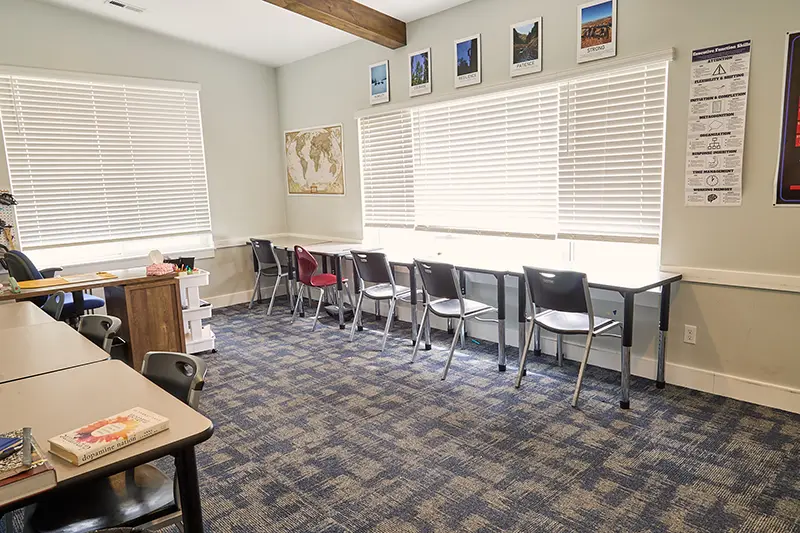
Academics Give Students Another Place to Apply Skills
School can reveal where a student needs support. A difficult assignment may bring up anxiety, while an approaching deadline may expose trouble with planning.
Our academic staff work with the clinical team to understand those barriers and adapt support to each student’s learning needs. Students can practice breaking work into manageable steps and asking for help before they feel overwhelmed.
Connecting school with treatment gives your son opportunities to use new skills during meaningful work.
Families Participate in the Work
Your son’s time away is also an opportunity to work on how your family communicates.
Parents participate in treatment planning and receive updates about their son’s progress. Family support gives you space to address recurring conflicts and practice clearer expectations together.
Your perspective helps the team understand what happens at home. You can also become familiar with the approaches your son is practicing so your family can prepare to support him after the program.


Preparing for the Next Environment
A skill needs to be useful wherever your son goes next. Transition planning helps connect his work here with the expectations he will face afterward.
Before departure, our team works with your family to discuss his next setting and the support he may still need. Daily responsibilities provide opportunities to practice greater independence while guidance remains available.
Progress is reviewed against individual goals over time. Those discussions help us adjust support and prepare for the next step. Every student’s needs and outcomes differ; the program does not guarantee a particular result.
Let’s Talk About What Your Son Needs
The right support starts with understanding whether a program is a good fit for your son.
Our admissions team can explain how this model works and discuss whether Live Strong House offers the level of support he needs. Bring your questions about daily life or your concerns about his next step. We’ll help you make an informed decision.
Frequently Asked Questions
What makes a residential program effective?
An appropriate fit and individualized goals are important starting points. At Live Strong House, our model connects treatment with daily practice and family participation. Ongoing review helps the team determine where support needs to change.
Why does Live Strong House combine therapy with daily-life practice?
Understanding a skill and using it during a difficult moment are different tasks. Daily practice gives students opportunities to apply therapeutic work with guidance nearby.
How do life coaches reinforce clinical work?
Coaches support treatment goals through everyday interactions. They help students practice skills and share relevant observations with the clinical team. Their mentoring complements the work of licensed therapists.
Why is family involvement important?
Family relationships remain part of your son’s life during and after treatment. Participation gives you opportunities to work on communication together and prepare for expectations at home.
How is progress evaluated over time?
The team revisits each student’s goals using observations from therapy and daily life, along with academic information and family input. Reviews consider how consistently he applies skills and how much guidance he still needs.